
Introduction
Artificial intelligence is transforming how we live, work, and interact with technology. From smart assistants to advanced data analysis, its influence is growing rapidly across industries. This artificial intelligence guide is designed for beginners and intermediate learners who want a clear and practical understanding of the field. You will learn what artificial intelligence is, why it matters, and how to get started step by step. The goal is to simplify complex ideas and help you confidently explore this powerful technology.
What is artificial intelligence?
Artificial intelligence refers to the ability of machines to perform tasks that normally require human intelligence. These tasks include learning, reasoning, problem-solving, and decision-making. Artificial Intelligence Guide
In simple terms, artificial intelligence enables computers to think, analyze data, and improve performance over time. Examples include voice assistants, recommendation systems, and self-driving technologies. Machine learning and deep learning are key branches that power modern AI systems.
Why is artificial intelligence important?

Artificial intelligence plays a crucial role in improving efficiency and productivity. Businesses use it to automate repetitive tasks, analyze large datasets, and make informed decisions. Artificial Intelligence Guide
It also enhances user experiences by personalizing services. For example, streaming platforms suggest content based on user preferences. In healthcare, artificial intelligence helps diagnose diseases and predict outcomes, saving time and resources.
Step-by-Step Guide
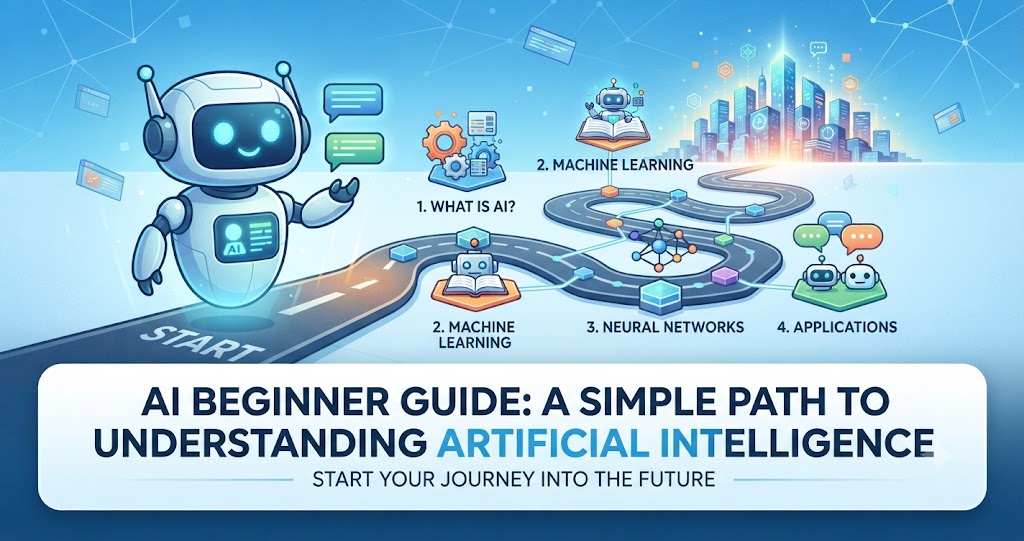
Step 1: Understand the Basics
Start by learning fundamental concepts such as algorithms, data, and machine learning. This foundation is essential for building deeper knowledge.
Step 2: Learn Programming
Programming languages like Python are widely used in artificial intelligence. Focus on writing simple programs and understanding logic.
Step 3: Explore Machine Learning
Study how machines learn from data. Practice with small datasets and experiment with models like regression or classification.
Step 4: Work on Projects
Apply your knowledge by building small projects. For example, create a chatbot or a simple recommendation system.
Step 5: Use AI Tools and Platforms
Familiarize yourself with tools and frameworks that simplify development. These tools help you implement ideas quickly.
Step 6: Keep Learning
Artificial intelligence evolves rapidly. Stay updated with trends, research, and practical applications to remain competitive.
Benefits
Artificial intelligence offers numerous advantages across various fields:
- Improves efficiency by automating repetitive tasks
- Enhances decision-making with data-driven insights
- Reduces human error in complex processes
- Saves time and operational costs
- Enables innovation in healthcare, education, and business
- Provides personalized user experiences
Risks or Disadvantages
Despite its benefits, artificial intelligence has certain challenges:
- High implementation costs for businesses
- Dependence on quality data for accurate results
- Potential job displacement in some industries
- Ethical concerns regarding privacy and security
- Risk of biased outcomes if data is not balanced
Common Mistakes to Avoid
Many beginners make avoidable mistakes when learning artificial intelligence. One common error is skipping the basics and jumping directly into advanced topics. Without a strong foundation, progress becomes difficult. Artificial Intelligence Guide
Another mistake is focusing only on theory without practical application. Building projects is essential to understanding real-world scenarios. Artificial Intelligence Guide Additionally, relying too much on tools without understanding underlying concepts can limit growth. Consistent practice and balanced learning are key to success.
FAQs
1. Is artificial intelligence difficult to learn?
Artificial intelligence can seem complex at first, but with consistent effort and structured learning, it becomes manageable.
2. Do I need programming skills to learn artificial intelligence?
Yes, basic programming knowledge, especially in Python, is highly recommended.
3. How long does it take to learn artificial intelligence?
It depends on your pace, but beginners can grasp fundamentals within a few months.
4. What are common uses of artificial intelligence?
It is used in healthcare, finance, education, marketing, and many other industries.
5. Can beginners build AI projects?
Yes, starting with simple projects helps build confidence and practical skills.
Expert Tips
To succeed in artificial intelligence, focus on consistency rather than speed. Practice regularly and work on real-world problems to strengthen your understanding.
Break complex topics into smaller parts and learn step by step. Join communities or forums where you can ask questions and share knowledge. Most importantly, stay curious and open to learning new techniques and ideas in this evolving field.
Conclusion
Artificial intelligence is a powerful technology shaping the future of industries and daily life. Artificial Intelligence Guide: This artificial intelligence guide has provided a clear overview, from basic concepts to practical steps for learning. By understanding its importance, benefits, and challenges, you can approach it with confidence. Artificial Intelligence Guide: Whether you are a beginner or an intermediate learner, consistent practice and continuous learning will help you grow. Start small, stay focused, and gradually build your skills to unlock the full potential of artificial intelligence in your personal and professional journey.