
Introduction
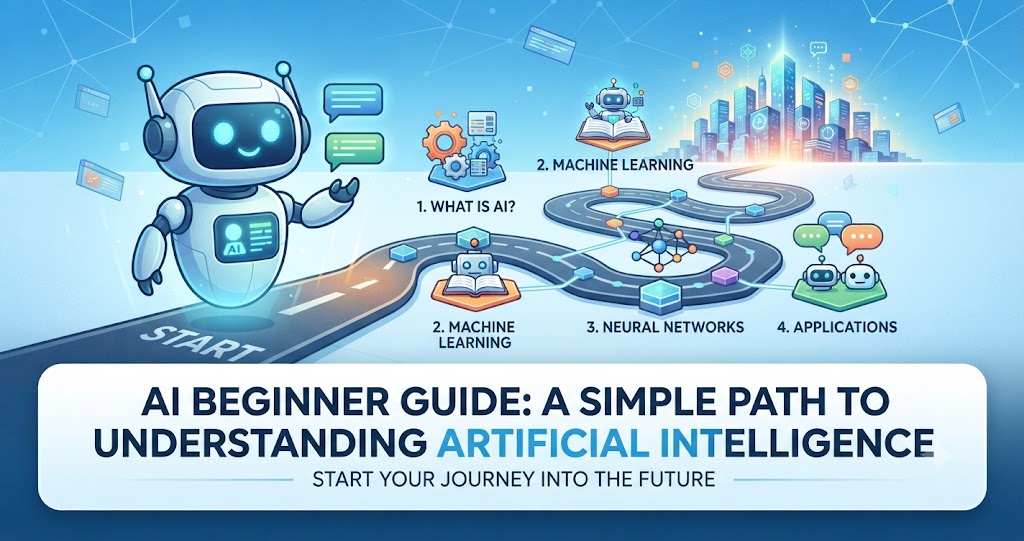
Artificial intelligence is transforming how we live, work, and communicate. From voice assistants to recommendation systems, it is becoming part of everyday life. This AI Beginner Guide is designed to help new learners understand the basics without feeling overwhelmed. Whether you are a student, professional, or curious learner, getting started is easier than you think. In this guide, you will explore key concepts, practical steps, and useful tips to build a strong foundation and begin your journey confidently in the world of artificial intelligence.
What is an AI beginner guide?
An AI Beginner Guide is a simple introduction to the concepts, tools, and applications of artificial intelligence. It explains how machines can perform tasks that usually require human intelligence, such as learning, reasoning, and problem-solving.
Artificial intelligence includes technologies like machine learning, natural language processing, and computer vision. For example, when a streaming platform suggests movies based on your interests, it uses intelligent algorithms. This guide helps beginners understand such ideas in an easy and structured way.
Why is an AI beginner guide important?

Understanding artificial intelligence is no longer optional. It is a valuable skill in today’s digital world. This AI Beginner Guide helps learners stay relevant and competitive in various fields.
It is important because it opens career opportunities, improves problem-solving skills, and enhances productivity. Businesses use intelligent systems to automate tasks and analyze data efficiently. By learning the basics, beginners can adapt to future technological changes and make informed decisions in their personal and professional lives.
Step-by-Step Guide
Step 1: Understand the Basics
Start with simple concepts like what artificial intelligence is and how it works. Learn key terms such as algorithms, data, and automation.
Step 2: Learn Core Concepts
Focus on areas like machine learning, data analysis, and pattern recognition. These are the building blocks of intelligent systems.
Step 3: Explore Tools and Platforms
Use beginner-friendly tools like spreadsheets, simple coding platforms, or visual tools to understand how models work.
Step 4: Practice with Small Projects
Try basic projects such as predicting outcomes or analyzing simple datasets. Practice helps build confidence and clarity.
Step 5: Stay Updated
Technology evolves quickly. Follow trends, read articles, and continue learning to stay ahead in the field.
Benefits
Learning from an AI Beginner Guide offers several advantages:
- Improves decision-making with data insights
- Enhances career opportunities in multiple industries
- Automates repetitive and time-consuming tasks
- Encourages innovation and creative thinking
- Helps understand modern technologies used daily
Risks or Disadvantages
Despite its benefits, there are some challenges to consider:
- Requires time and consistent learning effort
- May involve complex concepts for beginners
- Risk of over-reliance on automated systems
- Data privacy and ethical concerns
- Initial confusion due to technical terms
Common Mistakes to Avoid
Many beginners make avoidable mistakes when starting their journey. One common error is trying to learn everything at once. This can lead to confusion and frustration.
Another mistake is ignoring practical application. Learning theory without practice limits understanding. Beginners should also avoid relying only on one resource. Exploring multiple learning materials provides better clarity. Lastly, skipping foundational concepts can create gaps in knowledge, making advanced topics harder to understand later.
FAQs
What is the first step in learning artificial intelligence?
Start with basic concepts and understand how machines learn from data.
Do I need coding skills to begin?
Basic coding helps, but many beginner tools allow learning without programming.
How long does it take to learn the basics?
It depends on your pace, but a few weeks of consistent study can build a strong foundation.
Is artificial intelligence difficult to learn?
It can seem complex at first, but structured learning makes it easier over time.
What are common applications?
Examples include recommendation systems, chatbots, and image recognition tools.
Expert Tips
Start small and focus on understanding rather than memorizing. Consistency is more important than speed. Practice regularly with simple examples to build confidence.
Break complex topics into smaller parts and learn step by step. Engage with communities or discussion groups to share knowledge and solve problems. Keep experimenting and stay curious. Most importantly, do not fear mistakes, as they are part of the learning process.
Conclusion
This AI Beginner Guide provides a clear and simple roadmap for anyone starting their journey into artificial intelligence. By understanding the basics, practicing regularly, and avoiding common mistakes, beginners can build strong knowledge and skills. The key is to stay consistent and keep learning as technology evolves. Artificial intelligence is shaping the future, and gaining even a basic understanding can open many doors. With the right approach and mindset, anyone can begin exploring this exciting field and grow with confidence over time.