

Introduction
In today’s fast-paced digital world, businesses are constantly looking for smarter ways to improve efficiency and stay competitive. This is where AI tools for business come into play. From automating daily tasks to improving customer experience, these tools are transforming how companies operate. Whether you run a small startup or manage a growing enterprise, understanding how to use modern technology can give you a significant advantage. This guide will help beginners and intermediate users learn what these tools are, why they matter, and how to use them effectively.
What are AI tools for business?
AI tools for business are software solutions designed to automate, analyze, and optimize various business operations. These tools use advanced algorithms to process data, predict outcomes, and perform tasks that usually require human effort.
For example, businesses use smart chat systems for customer support, analytics platforms for decision-making, and automation tools for marketing campaigns. These solutions are not limited to large corporations; even small businesses can benefit from them with minimal investment.
Why are AI tools for business important?
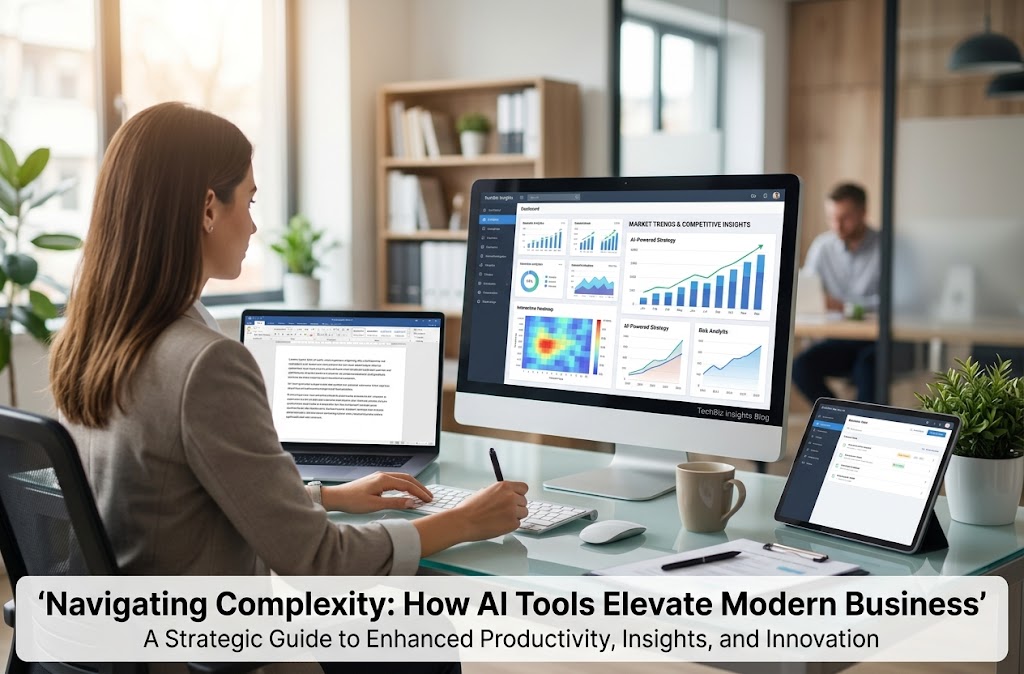
The importance of AI tools for business lies in their ability to save time, reduce costs, and improve accuracy. In a competitive market, businesses must act quickly and make informed decisions.
These tools help companies analyze large amounts of data, identify trends, and respond to customer needs faster. They also reduce manual errors and free up employees to focus on more strategic tasks. As a result, businesses can grow faster and operate more efficiently.
Step-by-Step Guide
1. Identify Business Needs
Start by understanding your business challenges. Do you need help with customer support, marketing, or data analysis? Clear goals will help you choose the right tools.
2. Research Available Tools
Explore different AI tools for business available in the market. Compare features, pricing, and ease of use before making a decision.
3. Start Small
Begin with one or two tools instead of adopting multiple solutions at once. This allows you to test effectiveness without overwhelming your team.
4. Train Your Team
Ensure your employees understand how to use the tools. Proper training improves productivity and reduces resistance to new technology.
5. Monitor Performance
Track the results after implementation. Measure improvements in efficiency, sales, or customer satisfaction to evaluate success.
6. Scale Gradually
Once you see positive results, expand your use of AI tools for business to other areas of your operations.
Benefits
Using AI tools for business offers several advantages:
- Improved efficiency by automating repetitive tasks
- Better decision-making through data insights
- Enhanced customer experience with faster responses
- Cost savings by reducing manual labor
- Increased productivity across teams
- Competitive advantage in the market
Risks or Disadvantages
Despite the benefits, there are some challenges to consider:
- Initial setup costs may be high for small businesses
- Dependence on technology can reduce human involvement
- Data privacy concerns if tools are not properly managed
- Learning curve for employees unfamiliar with new systems
- Risk of choosing the wrong tool for your needs
Common Mistakes to Avoid
Many businesses fail to get the best results due to common mistakes. One major error is adopting AI tools for business without clear goals. Without a strategy, even the best tools can become ineffective.
Another mistake is ignoring employee training. If your team does not understand how to use the tools, productivity may decrease instead of improving. Businesses also often choose tools based on popularity rather than suitability, which leads to poor outcomes. Lastly, failing to monitor performance can prevent you from identifying issues early.
FAQs
1. Are AI tools for business expensive?
Not always. Many affordable options are available, especially for small businesses and startups.
2. Can small businesses use these tools?
Yes, AI tools for business are designed for companies of all sizes and can be scaled as needed.
3. Do I need technical skills to use them?
Most modern tools are user-friendly and require minimal technical knowledge.
4. How quickly can I see results?
Results vary, but many businesses notice improvements within a few weeks of implementation.
5. Are these tools सुरक्षित for data?
Most platforms offer strong security, but businesses should always follow best practices for data protection.
Expert Tips
To get the most out of AI tools for business, always focus on your goals rather than trends. Choose tools that solve real problems instead of following hype.
Keep your data organized, as better data leads to better results. Regularly update your tools and processes to stay competitive. It is also helpful to gather feedback from your team and customers to improve usage. Lastly, maintain a balance between automation and human interaction to ensure a personal touch in your business operations.
Conclusion
AI tools for business are no longer a luxury but a necessity in today’s digital environment. They help businesses improve efficiency, reduce costs, and deliver better customer experiences. By understanding how these tools work and implementing them strategically, companies can unlock new growth opportunities. While there are some risks, careful planning and proper usage can minimize them. Whether you are just starting or looking to expand, adopting the right tools can transform your business and set you on the path to long-term success.