

Introduction
In today’s fast-paced digital world, students are constantly looking for smarter ways to study, research, and complete assignments. AI tools for students have become powerful resources that simplify learning and boost productivity. From writing assistance to research support, these tools help learners save time and improve their academic performance. Whether you are in school, college, or pursuing online education, understanding how to use these tools effectively can give you a significant advantage. This guide will help beginners and intermediate learners explore their importance, benefits, and practical usage.
What are AI tools for students?
AI tools for students are digital applications designed to assist learners in various academic tasks. These tools use advanced technology to analyze data, generate content, provide explanations, and offer personalized learning support.
They can help with writing essays, solving math problems, summarizing notes, and even improving language skills. For example, a student can use a writing assistant to correct grammar or a study tool to create quick summaries of long chapters.
Why are AI tools for students important?
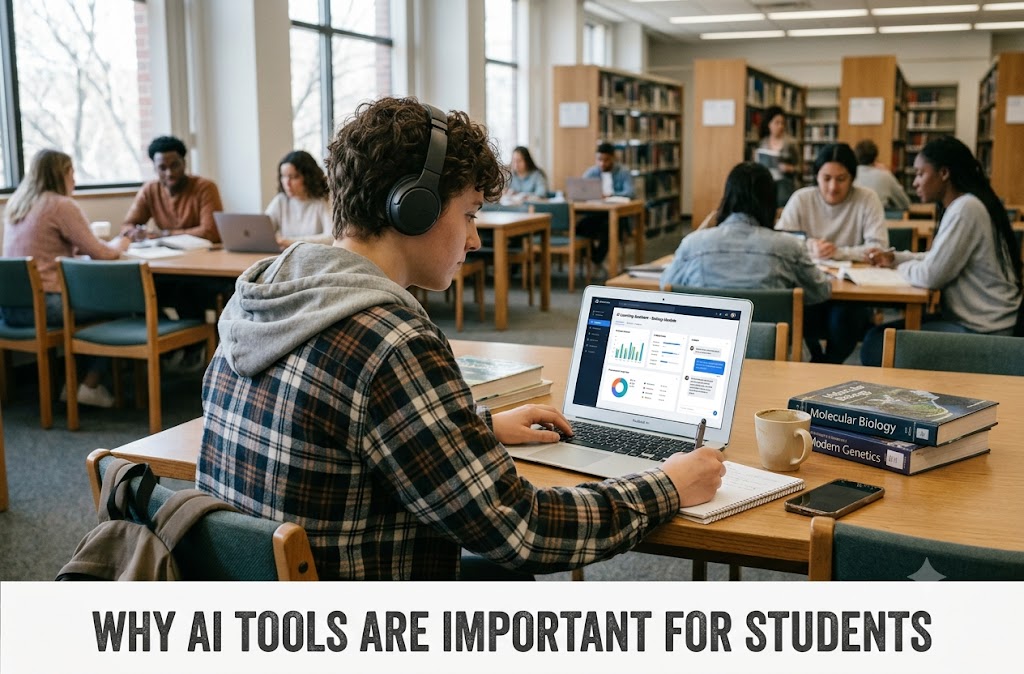
The importance of AI tools for students lies in their ability to make learning faster and more efficient. Students often struggle with time management, complex topics, and large workloads.
These tools provide instant support, helping learners understand difficult concepts quickly. They also encourage independent learning by allowing students to explore topics at their own pace. In competitive academic environments, using such tools can enhance both productivity and confidence.
Step-by-Step Guide
1. Identify Your Needs
Start by understanding what you need help with. It could be writing, research, note-taking, or problem-solving.
2. Choose the Right Tool
Select tools that match your academic goals. For instance, use writing tools for essays and study tools for exam preparation.
3. Learn Basic Features
Spend time exploring how the tool works. Understanding its features will help you use it more effectively.
4. Use It for Practice
Apply the tool to your daily tasks, such as summarizing notes or checking assignments.
5. Review and Improve
Always review the output. Make edits and ensure the content matches your learning requirements.
Benefits
Using AI Tools for Students offers several advantages:
- Saves time by automating repetitive tasks
- Improves writing and grammar skills
- Helps in a better understanding of complex topics
- Enhances productivity and focus
- Supports personalized learning experiences
- Assists in research and quick information gathering
Risks or Disadvantages
Despite their benefits, there are some limitations:
- Overdependence can reduce critical thinking
- Not always 100% accurate
- May provide generic or repetitive content
- Requires proper review and editing
- Can lead to academic integrity concerns if misused
Common Mistakes to Avoid
Many students misuse AI Tools for Students, which can affect their learning. One common mistake is relying completely on tools without understanding the material. This reduces learning efficiency.
Another mistake is not reviewing the generated content. Tools can make errors, so proofreading is essential. Students should also avoid using these tools for copying assignments directly, as it may lead to academic issues.
FAQs
1. Are AI tools for students free to use?
Some tools are free, while others offer premium features with paid plans.
2. Can these tools replace teachers?
No, they are only support tools and cannot replace human guidance.
3. Are these tools suitable for beginners?
Yes, most tools are user-friendly and designed for all levels.
4. Do they help improve grades?
They can improve performance if used correctly and responsibly.
5. Is it safe to use them daily?
Yes, but they should be used as a learning aid, not a shortcut.
Expert Tips
To get the most out of AI tools for students, always use them as a support system rather than a replacement for your own effort. Focus on learning the concepts instead of just completing tasks.
Combine these tools with traditional study methods like note-taking and revision. Always double-check the information provided and make necessary improvements. Consistent and mindful use will help you achieve better academic results.
Conclusion
AI tools for students are transforming the way learners study and manage their academic work. They offer convenience, speed, and valuable support in tackling complex tasks. However, their effectiveness depends on how wisely they are used. Students should focus on learning, not just completing assignments. By using these tools responsibly, learners can improve their skills, save time, and achieve better results. As education continues to evolve, mastering these tools will become an essential part of modern learning and academic success.