
Introduction
Machine learning has transformed how businesses and individuals solve problems using data. At the heart of this innovation are machine learning models, which help systems learn patterns and make decisions without explicit programming. Whether you are new to data science or improving your skills, understanding these models is essential. This guide explains key concepts, practical steps, and common challenges in a simple way. By the end, you will have a clear idea of how work and how to start using them effectively.
What are machine learning models?
Machine learning models are algorithms trained on data to identify patterns and make predictions or decisions. Instead of following fixed rules, these models learn from examples. For instance, a spam filter learns to classify emails based on past data.
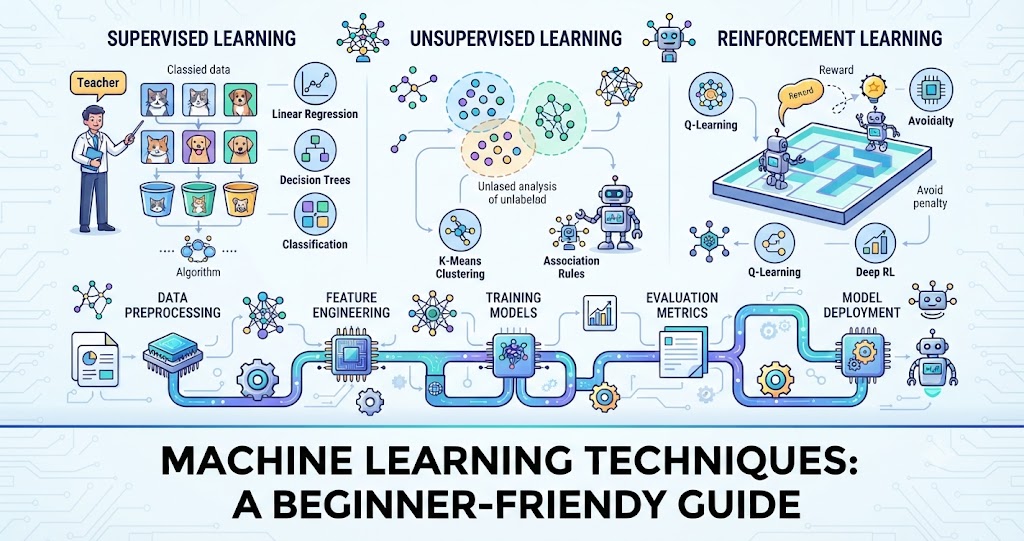
There are three main types of machine learning models:
- Supervised learning models (use labeled data)
- Unsupervised learning models (find hidden patterns)
- Reinforcement learning models (learn through feedback)
These models are widely used in recommendation systems, fraud detection, and image recognition.
Why are machine learning models important?

Machine learning models are important because they automate decision-making and improve accuracy over time. Businesses use them to analyze large datasets quickly and gain insights that humans might miss.
They also help in:
- Personalizing user experiences
- Improving operational efficiency
- Predicting future trends
For example, e-commerce platforms use them to recommend products based on user behavior.
Step-by-Step Guide
1. Define the Problem
Start by identifying what you want to achieve. It could be predicting sales, classifying images, or detecting fraud.
2. Collect and Prepare Data
Gather relevant data and clean it. Remove errors, handle missing values, and organize it properly.
3. Choose the Right Model
Select a suitable model, such as linear regression, decision trees, or neural networks, depending on your goal.
4. Train the Model
Feed the data into the model so it can learn patterns. This step involves adjusting parameters to improve performance.
5. Evaluate Performance
Use metrics like accuracy, precision, or recall to measure how well the model works.
6. Deploy and Monitor
After testing, deploy the model in real-world applications and monitor its performance regularly.
Benefits
Using machine learning models offers several advantages:
- Improved decision-making based on data
- Ability to process large datasets quickly
- Automation of repetitive tasks
- Continuous learning and improvement
- Enhanced customer experiences
These benefits make machine learning models valuable across industries such as healthcare, finance, and marketing.
Risks or Disadvantages
Despite their advantages, machine learning models also have some limitations:
- Dependence on high-quality data
- Risk of biased results
- Complexity in implementation
- High computational requirements
- Difficulty in interpreting some models
Understanding these risks helps in making better decisions when using machine learning models.
Common Mistakes to Avoid
Many beginners make avoidable mistakes when working with machine learning models. One common issue is using poor-quality data, which leads to inaccurate predictions. Another mistake is choosing overly complex models when a simpler one would work better.
Ignoring model evaluation is also risky. Without proper testing, you may deploy an unreliable system. Additionally, not updating models regularly can reduce their effectiveness over time.
To succeed, focus on clean data, proper evaluation, and continuous improvement.
FAQs
1. What are machine learning models used for?
They are used for prediction, classification, recommendation, and pattern recognition tasks.
2. Are machine learning models difficult to learn?
Not necessarily. Beginners can start with simple models and gradually learn advanced concepts.
3. What is the difference between AI and machine learning models?
Artificial intelligence is a broader concept, while machine learning models are specific tools used within it.
4. Do machine learning models require coding?
Basic knowledge of programming languages like Python is helpful but not always required.
5. How long does it take to build a model?
It depends on the complexity of the problem and the amount of data available.
Expert Tips
To get better results with machine learning models, always start with a clear objective. Focus on understanding your data before selecting a model. Simpler models often perform well and are easier to interpret.
Use cross-validation techniques to improve accuracy and avoid overfitting. Keep learning new tools and frameworks to stay updated. Most importantly, practice regularly by working on real-world projects.
Conclusion
Machine learning models play a crucial role in modern technology by enabling systems to learn from data and make intelligent decisions. From beginners to professionals, understanding how these models work opens many opportunities in different fields. By following the right steps, avoiding common mistakes, and applying best practices, anyone can start building effective solutions. As data continues to grow, the importance of machine learning models will only increase, making it a valuable skill for the future.