
Introduction
Machine learning basics are becoming essential knowledge in today’s digital world. From recommendation systems to voice assistants, machine learning powers many everyday technologies. Understanding how it works can help you build smarter applications, analyze data efficiently, and make informed decisions. This beginner-friendly guide explains core concepts in simple terms, making it easier for both new and intermediate learners to grasp the fundamentals and start exploring practical applications with confidence.
What are machine learning basics?
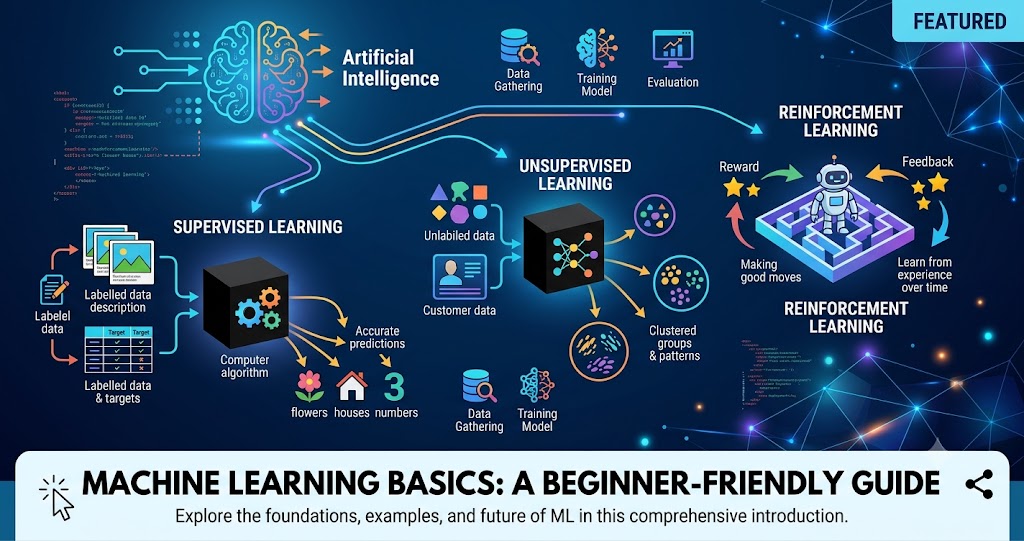
Machine learning basics refer to the foundational concepts behind systems that learn from data without being explicitly programmed. Instead of following fixed instructions, algorithms analyze patterns and improve their performance over time. For example, an email spam filter learns to identify unwanted messages by studying past data. Core elements include data, algorithms, and models that work together to generate predictions or insights.
Why is Machine Learning Important?

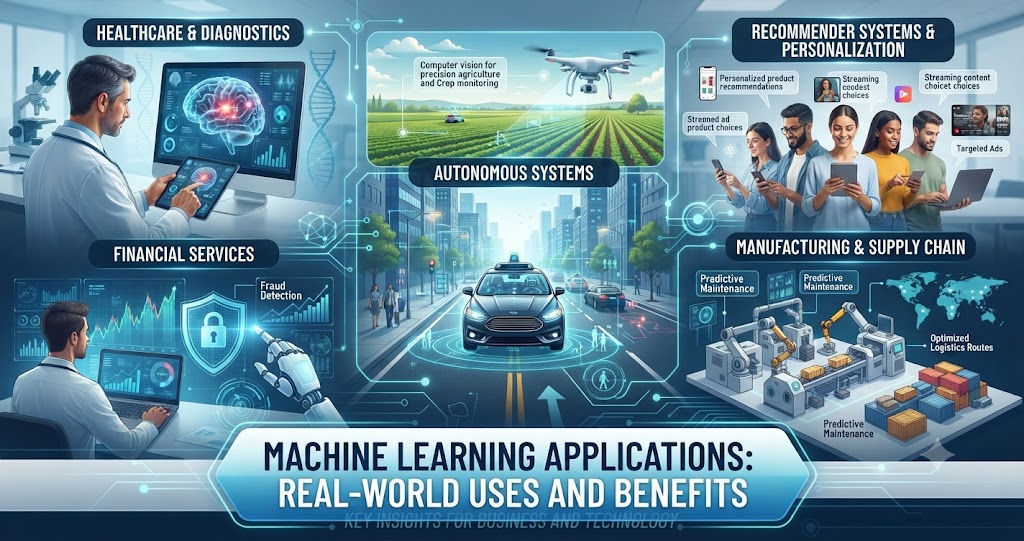
Machine learning basics matter because they drive innovation across industries such as healthcare, finance, education, and marketing. Businesses use predictive models to understand customer behavior and improve services. In healthcare, it helps detect diseases early through data analysis. Learning these concepts enables individuals to stay competitive in the job market and participate in the growing data-driven economy.
Step-by-Step Guide
1. Understanding Data
Data is the foundation of machine learning. It can be structured, like spreadsheets, or unstructured, like images and text. Clean, relevant data improves model accuracy and reliability.
2. Choosing Algorithms
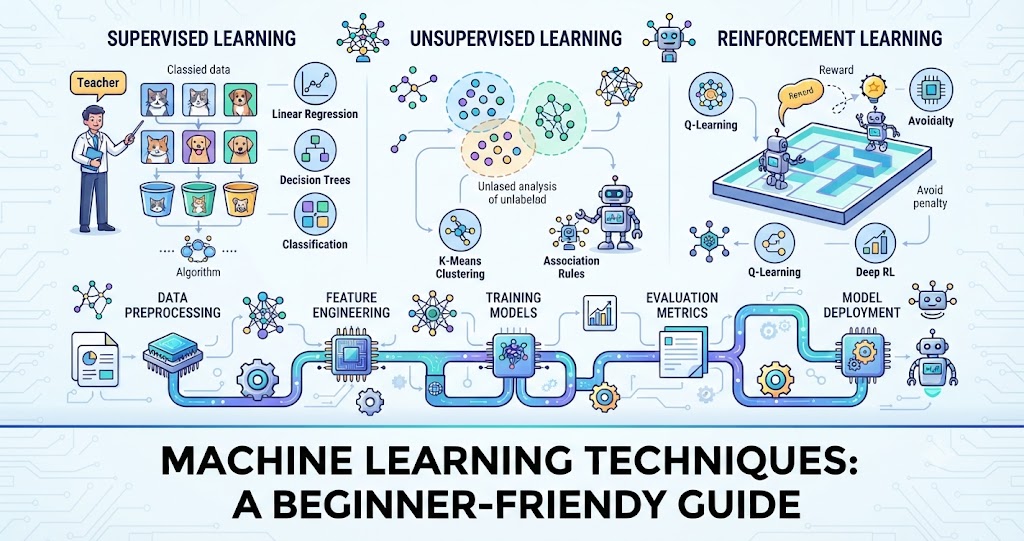
Algorithms are methods used to find patterns in data. Common types include regression, classification, and clustering. Selecting the right algorithm depends on your problem and dataset.
3. Training the Model
Training involves feeding data into the algorithm so it can learn relationships. The model adjusts its parameters to minimize errors and improve predictions.
4. Testing and Evaluation
After training, the model is tested on new data to evaluate its performance. Metrics such as accuracy, precision, and recall help measure effectiveness.
Benefits
- Improves decision-making through data insights.
- Automates repetitive tasks efficiently.
- Enhances customer experiences with personalization.
- Supports innovation across industries.
Risks or Disadvantages
- Requires large amounts of quality data.
- Can be biased if data is incomplete.
- Implementation can be costly.
- Needs ongoing monitoring and updates.
Common Mistakes to Avoid
Beginners often make mistakes such as using poor-quality data, selecting inappropriate algorithms, or overfitting models. Ignoring proper evaluation methods can lead to inaccurate results. It is also common to expect instant success without understanding the learning curve. Taking time to experiment, validate models, and refine techniques can significantly improve outcomes in machine learning basics.
FAQs
What are machine learning basics?
They are fundamental concepts that explain how systems learn from data.
Do I need programming skills to start?
Basic knowledge of programming helps, but beginners can start with simple tools.
Where is machine learning used?
It is used in healthcare, finance, marketing, and many other fields.
How long does it take to learn?
It depends on your pace, but consistent practice speeds progress.
Is machine learning difficult?
It can be challenging, but clear concepts make it manageable.
Expert Tips
Start with simple projects to build confidence and gradually move to complex problems. Focus on understanding concepts rather than memorizing formulas. Practice regularly with real datasets to gain hands-on experience. Stay updated with industry trends and tools, as the field evolves rapidly. Consistency and curiosity are key to mastering machine learning basics effectively.
Conclusion
Machine learning basics provide a strong foundation for understanding modern technology and data-driven solutions. By learning how data, algorithms, and models interact, individuals can unlock powerful opportunities in various industries. While challenges exist, consistent practice and the right approach make the learning process rewarding. Whether you aim to build intelligent systems or simply understand how technology works, mastering these basics is a valuable step toward future success.
Key concepts within machine learning basics include supervised learning, unsupervised learning, and reinforcement learning. Supervised learning uses labeled data to train models, such as predicting house prices based on past records. Unsupervised learning finds hidden patterns without labels, like grouping customers by behavior. Reinforcement learning focuses on decision-making through rewards and penalties, often used in gaming and robotics. Understanding these categories helps learners choose the right approach for different tasks and build more effective solutions.